

How to Choose a Web Design Company in Dubai
What to ask a Dubai web design company, what a proposal must contain, who owns what, and how to verify reviews and a trade licence.
Read the guideGuides
How Dubai and UAE businesses can tell when a website needs a redesign, decide between repair and rebuild, and relaunch without losing search traffic.
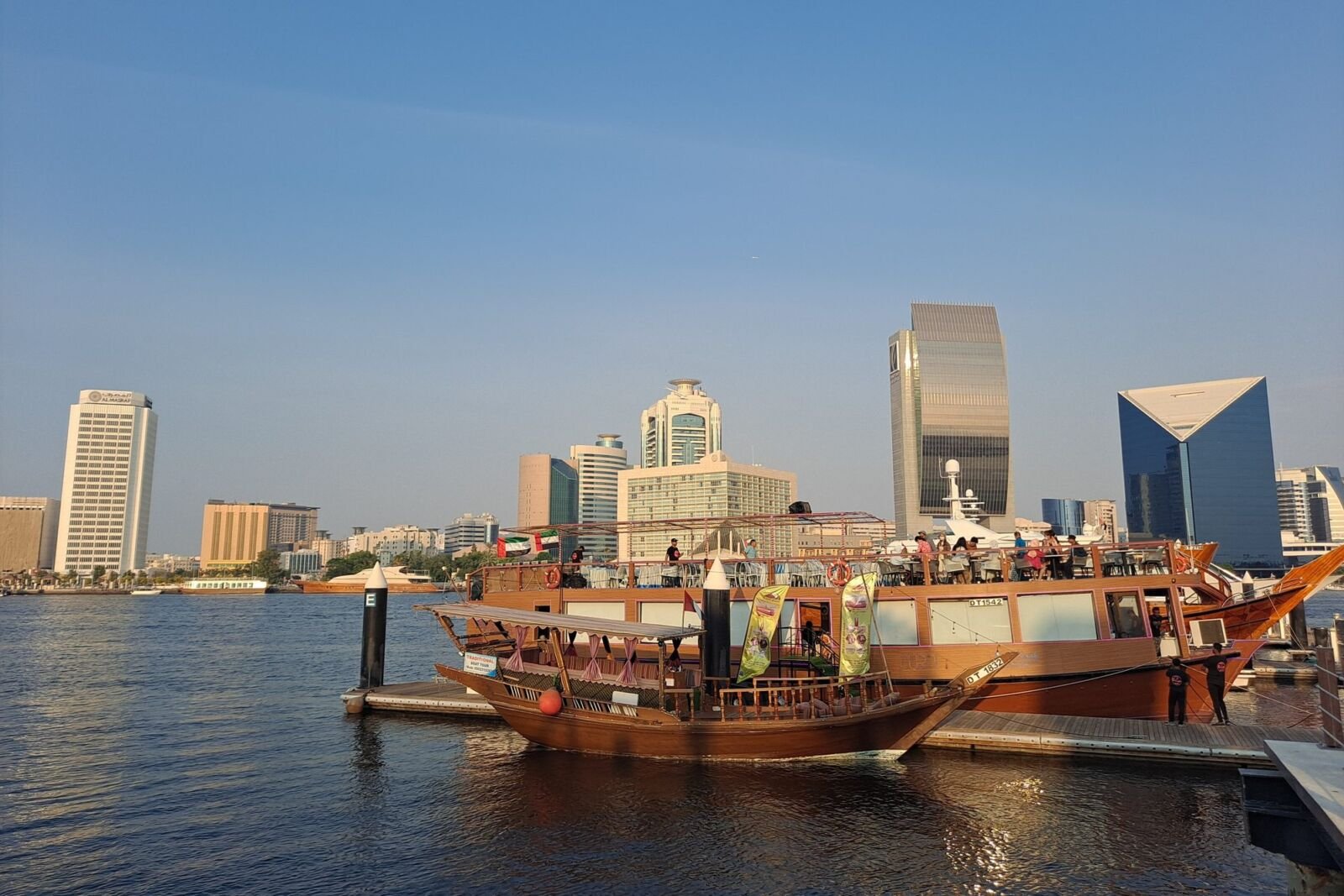
Your website needs a redesign when it is actively costing you enquiries: it is slow or awkward on phones, your team cannot update it, it no longer describes what you sell, or you cannot measure what it produces. You can redesign without losing Google rankings if you keep the URLs that already perform, permanently redirect every URL that changes, record benchmarks before launch and watch Search Console closely for the first month. The ranking losses we most often see after a redesign come from skipped redirects and removed content, not from the new design itself.
In short
An old design on its own is a weak reason to rebuild. These are the stronger signals, and the more of them apply, the stronger the case.
Google’s mobile first indexing documentation says Google uses the mobile version of a site’s content for indexing and ranking. If your mobile pages hide content, load slowly, or make visitors pinch and zoom to use a form, both customers and search suffer. Our website speed and Core Web Vitals guide explains how to measure it.
If changing a price, adding a service or posting a job needs a developer, the site will fall behind the business. One issue we often see is a site built on a page builder or theme that nobody on the current team knows how to use, so updates simply stop.
Businesses in Dubai change quickly: new services, new locations, a shift from consumers to corporate clients. When the navigation and homepage still reflect the old offer, visitors cannot find what you now sell, and search engines have no pages to rank for it.
For many UAE audiences an English only site, or an Arabic version with broken right to left layouts and machine translated copy, undermines trust. Adding proper Arabic often touches templates, URLs and navigation, which moves a project closer to a rebuild. Our bilingual website guide covers what good looks like.
No conversion tracking, forms that go to an inbox nobody checks, WhatsApp clicks that are never counted. If you cannot connect the site to enquiries, you cannot judge whether it works, and any redesign decision becomes guesswork.
Outdated plugins that cannot be updated without breaking the site, unsupported versions of the CMS, or custom code nobody can maintain are all reasons to consider rebuilding on a stack your team can look after.
A redesign is not always the right answer. Sometimes speed, structure and a rewritten homepage are enough, and a focused repair keeps the rankings you already have with far less disruption. The table below is how we would frame the decision.
| Situation | Repair is usually enough | Rebuild is usually better |
|---|---|---|
| Speed | Slow because of oversized images, too many scripts or poor hosting | Slow because of the theme, builder or architecture itself |
| Content | Pages exist but the copy is weak or outdated | The site structure no longer matches your services |
| Design | Layout works, but the homepage and key pages look dated | Templates cannot support the layouts and features you need |
| Editing | CMS is sound, the team needs training | CMS is unsupported, locked or too fragile to update |
| Arabic | Arabic exists and needs better translation and fixes | No bilingual structure, or right to left support is fundamentally broken |
| Rankings | Site ranks well for important terms today | Site ranks for little, so there is less to protect |
The last row matters more than owners expect. A site that ranks well has more to lose, which is an argument for either repair or a rebuild handled with great care over URLs and redirects.
Before anyone opens a design tool, list every URL the current site has and decide its future. Google’s guide to site moves with URL changes suggests identifying your important URLs from sources such as your sitemaps and analytics; in practice you should also pull the pages report from Search Console and run a crawl of the live site.
Combine the XML sitemap, a full crawl, the Search Console pages report and the analytics landing pages report into one spreadsheet. Include PDFs, blog posts and old campaign pages.
For each URL, note clicks and impressions from Search Console, sessions and conversions from analytics, and whether other sites link to it.
Mark each URL keep, improve, merge or remove. Pages with search traffic, links or conversions should rarely be removed.
For merged pages, choose the single page that will replace them. For removed pages with no replacement, note that they should return a 404 or 410.
This spreadsheet becomes the backbone of the project. It shapes the new sitemap, tells the copywriter which pages must survive, and later becomes your redirect map.
The safest redirect is the one you never need. If a page keeps the same address, content of a similar scope and a similar title, search engines have far less to reprocess. Change URLs only when there is a real benefit: duplicate addresses for the same page, unreadable query strings, or a structure that genuinely cannot represent your new services.
Resist changing URLs for tidiness alone. Swapping /services/web-design for /web-design-services because it reads slightly better creates redirect work and risk for very little gain.
The safest redirect is the one you never need. Change a URL only when the change earns its risk.
For every URL that changes, map one old address to one new address, and choose the closest equivalent page rather than sending everything to the homepage. Google’s guidance is specific here:
A simple map is enough, as long as it is complete and tested.
| Old URL | New URL | Action | Tested |
|---|---|---|---|
| /our-services/web-design | /services/website-design | 301 redirect | Yes |
| /web-design-packages | /services/website-design | 301 redirect, content merged | Yes |
| /about | /about | Unchanged | Yes |
| /expo-offer | none | Return 410 | Yes |
Many redesigns keep the same domain, and then the Change of Address tool is not needed. Google’s Search Console Help on the Change of Address tool says it is for moving from one domain or subdomain to another. It is not used for HTTP to HTTPS moves, for moving pages within your own site, or for switching between www and non www; in those cases redirects, sitemaps and canonical tags do the work.
If you are changing domain as part of the redesign, the same page sets out the requirements: you must be an owner of both old and new properties in Search Console using the same Google account, and the old homepage must 301 redirect to the new homepage. The move notification shows for 180 days, and Google says to maintain redirects for at least 180 days, longer if they still receive traffic from Google Search. Taken together with the site move guidance of at least a year, the simple rule is to leave redirects in place.
Without a baseline, you cannot tell a normal dip from a real problem. Save these before launch day, ideally covering at least the previous three months so seasonality is visible:
The crawl export is the item teams most often regret skipping. Once the old site is gone, it is the only record of what each page said and how it was titled.
Google’s site move guide reminds you to remove noindex rules used on the new site before the move. Check robots.txt and meta robots on the live site within minutes of launch.
Run every old URL from your map through a checker and confirm each returns a single 301 to the right page. Google mentions the URL Inspection tool for individual URLs and scripts for larger lists.
Submit the updated XML sitemap in Search Console and confirm it contains only live, canonical URLs.
Submit every form, click the call and WhatsApp buttons, and confirm conversions arrive in analytics and in the inbox or CRM.
Open key Arabic and English pages on real phones, check language switching, hreflang tags and right to left layout.
Confirm HTTP, HTTPS, www and non www all resolve to one version with a single redirect.
Google is candid that change takes time. Its site move guide says to expect temporary ranking fluctuations while it recrawls and reindexes a site, and that for medium sized websites it can take a few weeks or more for Google to start showing the new URLs instead of the old ones. Some movement is therefore normal. What you are looking for is movement that does not recover, or that is concentrated on specific pages.
A practical weekly routine for the first month:
If a page that ranked well has dropped sharply and stayed down, compare the old crawl export with the new page. The usual causes are a missing redirect, a title that lost the terms people searched for, or content that was cut during the rewrite. Those are fixable, and the sooner they are fixed, the sooner the page can recover.
If you are weighing up a redesign, our website redesign service in Dubai can help you work through the repair or rebuild question first, and you approve the full design before development begins. For sites where search traffic matters most, SEO services are available afterwards on an optional monthly retainer to keep monitoring beyond the first month.
Straight answers
It can if URLs change without redirects, content is removed or the new site blocks crawling. Google's site move documentation says to expect ranking fluctuations while it recrawls and reindexes a site, so some movement is normal. Keeping URLs, redirecting every changed URL with a permanent redirect and monitoring Search Console keeps the risk low.
Google's guidance for site moves with URL changes is to keep redirects for as long as possible, generally at least one year. There is rarely a good reason to remove them sooner.
Only if you are moving to a different domain or subdomain. Google's Search Console Help says it is not needed for HTTP to HTTPS moves, for moving pages within the same site, or for switching between www and non www versions.
You can, but only change URLs where there is a clear benefit, such as confusing or duplicated addresses. Every changed URL needs a mapped permanent redirect, updated internal links and an updated sitemap.
Combining a domain change with a full redesign makes it harder to tell which change caused any traffic movement. If both are necessary, plan them carefully with a complete redirect map, and record benchmarks before either change goes live.
Codeeo's process starts with Discovery, which is where the repair or rebuild question gets answered. Clients approve the full design before development begins, the new site is tested on real devices and browsers, and launch includes SSL, sitemap submission and conversion tracking. Costs come as a fixed written quote, scoped to you.
Sources
Fixed price, in writing
Got it. Your quote is being written now.
In business hours you will have it within 45 minutes. Check your inbox for the confirmation.
Keep reading
What to ask a Dubai web design company, what a proposal must contain, who owns what, and how to verify reviews and a trade licence.
Read the guide
LCP, INP and CLS explained for UAE business owners, with Google's thresholds and the speed fixes that matter most, in priority order.
Read the guide
Right to left layout, Arabic fonts, hreflang, transcreation and CMS setup: what a proper Arabic and English website in the UAE needs.
Read the guide