
What Is Responsive Web Design and Why It Matters
If a CEO opens your site on an iPhone while sitting in a Sheikh Zayed Road traffic jam and the text looks tiny or…
Read the guide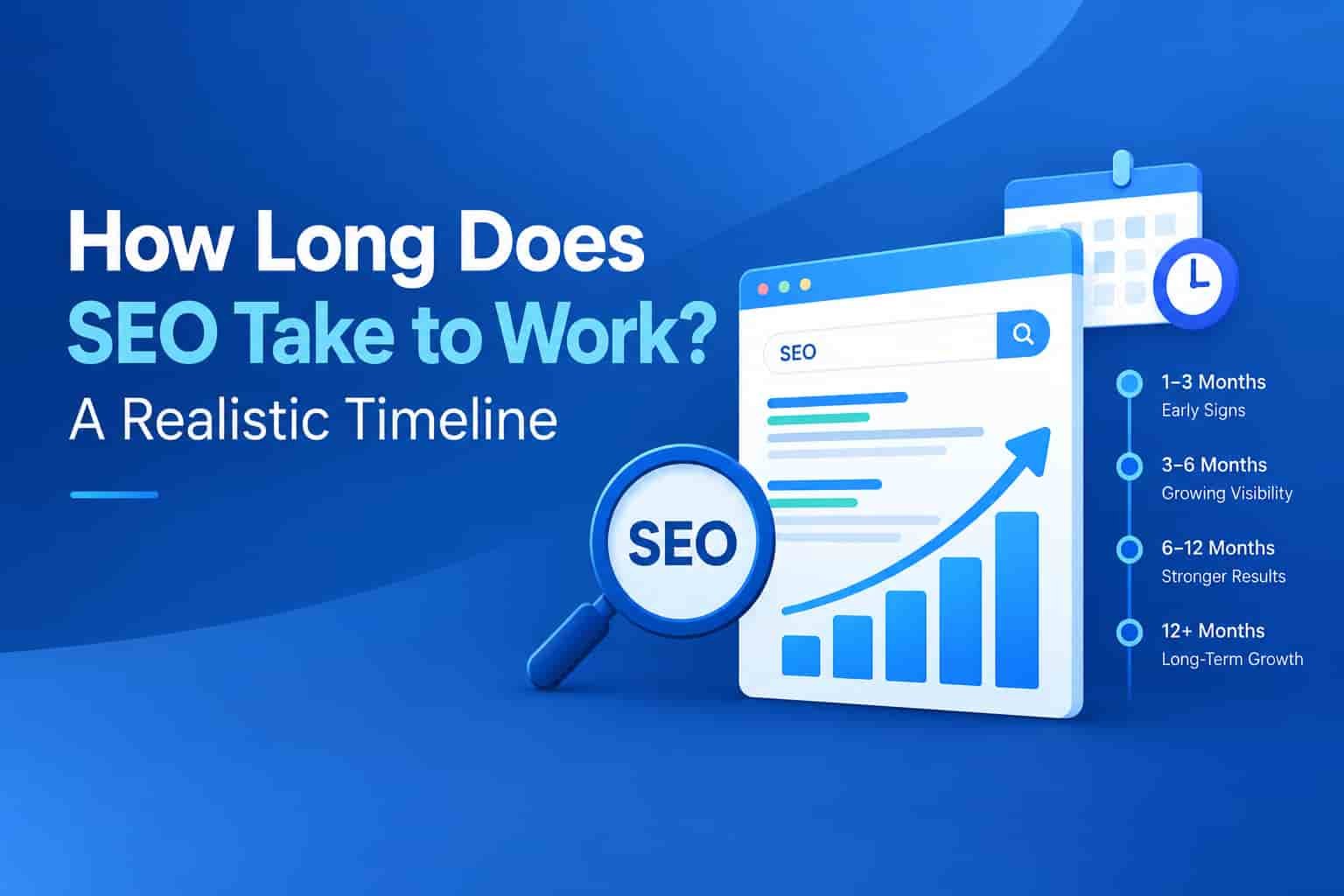
Understanding how search engine optimization operates helps you plan your business growth effectively. Many business owners ask how long does seo take to show real business growth. The truth is simple. SEO is a long-term strategy, not an overnight fix. Most websites start seeing initial traction within three to six months. However, full competitive results usually require nine to twelve months of consistent effort. At webdesignindubai, we help businesses build strong digital foundations that deliver long-lasting search visibility and high-quality organic traffic.
Months 1–3: Foundation & Initial Signals
Months 1–3
Technical audits, keyword research, core page fixes, and initial search indexing.
Months 4–6: Early Growth & Impressions
Months 4–6
Rising search impressions, initial keyword movements, and steady content publishing.
Months 6–9: Traffic & Lead Generation
Months 6–9
First-page keyword rankings, noticeable traffic growth, and phone calls or leads.
Months 9–12+: Scaling & Strong ROI
Months 9–12+
Dominant domain authority, revenue growth, and expanding into hard keywords.
| SEO Timeline Stage | Key Activities | Expected Results |
| Months 1–3 | Technical fixes, keyword strategy, site setup | Indexing fixes, initial impressions |
| Months 4–6 | Content publishing, page optimization | Rising search rankings, steady clicks |
| Months 6–9 | Authority building, backlink acquisition | Organic traffic growth, new sales leads |
| Months 9–12 | Keyword scaling, total search optimization | Top rank positions, positive ROI |
The search optimization journey follows distinct stages as search engines index your pages. During the first three months, the work focuses on technical health, strategy, and content setup. You will see crawl improvements and early keyword impressions. Between months four and six, organic traffic starts to grow as search engines trust your content. By months six to twelve, your domain authority increases significantly. This stage brings steady phone calls, higher conversion rates, and predictable online revenue for your business.
Many business owners want a clear answer to a common question: how long does seo take to work for their site. Generally, noticeable performance improvements appear between four and six months. Early indicators include rising impressions in Google Search Console and better page positions for specific long-tail keywords. However, competitive industries often need up to a year of continuous content updates and link building to reach top Google positions.
Several key elements determine the speed of your search progress. Domain age, past site history, technical issues, content quality, and existing backlink profiles all play critical roles. Additionally, your industry competition level and available budget directly influence progress. A new website competing in a crowded field needs more time to build trust than an established domain targeting low-competition search phrases.
Google uses automated systems to evaluate new web properties for authority and safety. When you launch a site, search crawlers test how users interact with your pages. Google checks your site architecture, mobile layout speed, core Web Vitals, and expert content signals. Building early trust requires published author profiles, original information, secure security protocols, and clear contact details across your domain.
Launching a brand-new website in the United States requires patience and planning. Because your brand lacks domain history, search algorithms evaluate your trustworthiness slowly. In the first three months, focus on technical health, site structure, and foundational pages. Between months six and nine, steady blogging creates keyword relevance. Most new American sites achieve reliable search traffic and top-ten keyword ranks after nine to twelve months of active work.
Established websites already enjoy search engine trust and indexed pages. Consequently, optimization campaigns often produce results faster than brand-new domains. Fixing crawl errors, updating old content, and improving internal link structure can yield positive ranking movements within two to four months. Furthermore, leveraging existing domain authority allows quick wins on low-competition topics while larger keyword strategies develop.
The first month centers on research, data collection, and roadmap planning. SEO services specialists perform comprehensive site audits to uncover technical errors, broken links, and slow pages. Simultaneously, deep keyword research identifies high-intent buyer terms and content gaps. Creating a strategic content calendar during month one ensures all future writing directly serves target audience needs and business goals.
Month two focuses on technical optimizations and page improvements. Specialists repair crawl bugs, optimize title tags, refine meta descriptions, and clean up heading structures. Additionally, page loading speeds are optimized for mobile devices and core web vital guidelines. These structural enhancements make it easier for search engine bots to explore, index, and understand your content efficiently.
During month three, regular content publishing begins in earnest. Detailed blog posts, product guides, and service pages go live according to the strategy plan. Search engines begin crawling the new content, resulting in rising total search impressions. While top positions are rare this early, you will spot your pages creeping into search results pages for long-tail search terms.
By month four, momentum begins to show clearly in your search analytics. Search engines start awarding better positions as user engagement signals validate your helpful content. Organic clicks increase steadily month over month. During this phase, optimizing secondary keywords and strengthening internal linking boosts page relevance, pushing primary keywords closer to page one positions.
Between months six and nine, off-page strategies drive substantial domain growth. Strategic outreach earns high-quality backlinks from relevant authority blogs and industry news platforms. Consequently, target keywords reach first-page positions. Higher search visibility brings qualified target prospects, resulting in more phone calls, form submissions, e-commerce sales, and direct customer consultations.
The final phase of the first-year timeline focuses on scaling success. You now hold solid rankings for core industry terms. Optimization efforts shift toward capturing high-competition keywords and expanding target search terms. Ongoing page updates, fresh content hub creation, and continuous link acquisition secure your competitive positions against industry rivals.
Local search optimization often produces results faster than national campaigns. By optimizing your Google Business Profile, gathering local reviews, and building accurate local directory citations, local visibility improves within two to four months. Local businesses targeting specific geographic areas can dominate map pack results quickly because competition is constrained to local boundaries.
E-commerce sites feature complex structures with hundreds of product and collection pages. Therefore, e-commerce optimization typically requires six to nine months to yield substantial traffic increases. Speeding up product page indexing, fixing canonical tags, writing unique product descriptions, and obtaining review schema markup are essential steps to capture buyer intent traffic.
Technical SEO fixes can generate rapid performance gains. Fixing site indexation issues, removing duplicate content, improving page speed, or repairing broken redirect chains often leads to quick ranking updates within weeks. Search engine crawlers appreciate clean architecture, indexing updated technical structures quickly once recrawling occurs.
Content optimization requires systematic patience. Fresh, high-quality blog posts and informational articles usually take three to six months to achieve top ranking power. As search engines evaluate bounce rates, time on page, and social shares, your helpful content steadily ascends competitive search rankings.
Backlinks serve as authority votes in modern search engines. However, new incoming links do not alter page rankings overnight. It typically takes three to ten weeks for search crawlers to discover new links, pass link equity, and adjust site positions. Natural link building produces stable, long-term authority growth.
Keyword difficulty dramatically alters ranking speed. Low-competition, highly specific search terms can rank on page one within two to three months with focused content. Conversely, high-competition keywords dominated by established industry giants often require eight to twelve months of continuous content upgrades, strong link profiles, and user experience enhancements.
Certain keywords take longer to rank due to commercial intent, search volume, and competitor strength. When established websites hold top spots for years, search algorithms demand substantial proof before replacing them. You must prove superior user value, higher content depth, and strong backlink authority to displace top competitors.
Google regularly deploys algorithm updates to refine user search quality. These algorithm refreshes can impact search performance timelines unexpectedly. While minor updates cause temporary position fluctuations, websites that consistently adhere to helpful content standards recover quickly and often gain search visibility after major update rollouts finish.
The United States features one of the most competitive search landscapes globally. American businesses invest heavily in content generation and backlink strategies. Due to this high market density, ranking in U.S. search results requires detailed market research, higher content quality standards, and consistent strategic execution over longer time periods.
Before top rankings arrive, early positive indicators signal that your optimization plan is working correctly. You will notice increased total impressions in Google Search Console, a rising number of indexed pages, and gradual ranking improvements for secondary search terms. Steady organic impression growth is the clear precursor to rising user clicks and sales conversions.
Tracking the right indicators prevents frustration and keeps your optimization campaign focused on real growth goals. Key performance metrics include organic traffic volume, keyword ranking positions, search impressions, click-through rates, user engagement time, and overall conversion numbers. Monitoring these metrics monthly ensures your strategy adapts dynamically to performance data.
Organic traffic measures the actual visitors reaching your site through unpaid search results. Tracking organic session volume month over month validates your strategic content choices. Consistent organic growth demonstrates that your targeted keyword terms match user intent and deliver valuable answers to web searchers.
Monitoring keyword ranking positions shows how your individual pages move through search engine index lists. Tracking primary, secondary, and long-tail terms reveals ranking trends over time. Early movement from page five to page two signals strong optimization progress long before traffic spikes occur on page one.
Search impressions represent how many times your website appears in user search queries. Clicks show how many users actively visit your website after seeing your search snippet. Monitoring impression growth helps identify high-potential pages that simply need title or meta tag adjustments to increase click-through performance.
Traffic growth is valuable only when it drives real business revenue. Tracking conversion actions like phone calls, contact form submissions, email signups, and online purchases connects search optimization directly to business growth. Ultimately, positive return on investment is the true goal of any successful digital campaign.
If your website shows no ranking progress after six months, perform an immediate strategy review. Inspect your domain for manual penalties, hidden technical bugs, poor mobile usability, or bad link sources. Re-evaluate your keyword targeting to ensure you are not competing against unmanageable domain authorities without adequate resources.
Several common mistakes slow down search performance. Publishing thin or AI-copied content, ignoring mobile optimization, building low-quality spam links, and changing URL structures without proper redirects hurt progress. Additionally, targeting overly broad keywords without matching search intent confuses search engines and delays page indexing.
While search optimization requires time, strategic actions can accelerate your growth timeline. Publishing authoritative content frequently, repairing all technical errors immediately, targeting lower-competition buyer terms first, and pursuing targeted public relations for quality backlinks speed up site authority gains. Consistent effort yields the fastest sustainable success.
Effective search strategy requires continuous monthly work. A complete monthly package includes publishing fresh expert articles, optimizing existing pages, repairing new technical bugs, building quality backlinks, and reviewing analytics data. Consistent monthly effort maintains search momentum and prevents competitors from overtaking your hard-won search positions.
Small businesses in the United States can achieve rapid growth by focusing on hyper-local keywords and specialized service pages. By targeting niche audience queries, small firms often see initial leads within three to five months. Focused, local strategies allow nimble businesses to outperform larger corporate competitors in specific regions.
Setting realistic expectations prevents premature cancellation of effective optimization campaigns. Business owners must understand that search optimization builds compound digital value over time. Expect foundational work during months one to three, initial traction during months four to six, and measurable revenue growth during months seven to twelve.
Paid advertising offers instant visibility by buying ad slots at the top of search pages. However, traffic stops the moment your daily ad budget ends. Conversely, search optimization requires upfront time to build rankings, but it delivers sustainable, compounding organic traffic that continues generating leads long after content is created.
Search engine optimization is an ongoing business practice rather than a one-time project. Competitors continually publish content and earn backlinks to claim top search positions. Continuous investment ensures your business maintains its top rankings, adapts to search algorithm updates, and systematically captures new search market share.
Most businesses experience a positive return on investment between months six and twelve. As organic traffic expands and high-intent keywords rank on page one, customer acquisition costs drop compared to paid ads. Over time, search optimization yields one of the highest returns of any digital marketing strategy.
To summarize, your search performance evolves predictably over a full year of strategic effort:
Building a powerful online presence takes consistent dedication, strategic expertise, and patience. By partnering with experienced professionals like webdesignindubai and following proven search guidelines, your business can build sustainable organic visibility that drives revenue for years to come.
Fixed price, in writing
Got it. Your quote is being written now.
In business hours you will have it within 45 minutes. Check your inbox for the confirmation.
Keep reading

If a CEO opens your site on an iPhone while sitting in a Sheikh Zayed Road traffic jam and the text looks tiny or…
Read the guide
Have you ever wondered what is backlinks in seo example? Imagine a backlink as a high five from one website to another. When a…
Read the guide
Planning a website project in Dubai requires clear direction and local market awareness. Every company needs a strong online footprint to win customers. Choosing…
Read the guide